This guide focuses on telecom expense management (TEM), enterprise connectivity, and how telecom services, technology spend management can extend financial and operational governance across areas such as mobility, SaaS, and other technology investments.
Summarize this article with:
A Practical Guide to Managing Telecom Costs
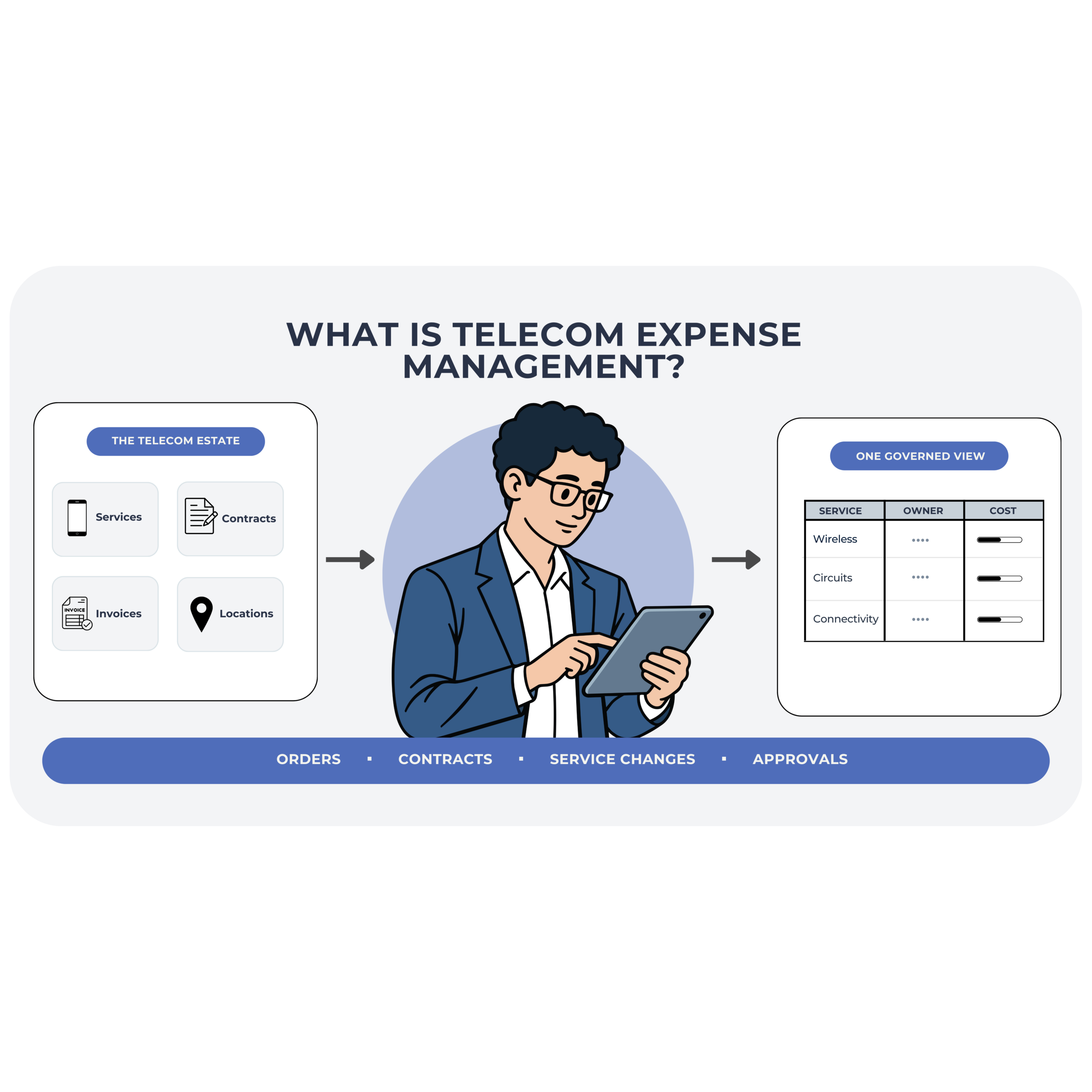
The enterprise telecom estate spans carriers, circuits, connectivity services, contracts, invoices, locations and increasingly complex network infrastructures. As those environments grow, managing the estate involves more than ensuring you pay invoices on time.
At a minimum, organizations need to know which services they run, where they are located, who owns them, and what they cost. Beyond the baseline, organizations also need a consistent framework for managing orders, contracts, service changes and approvals, along with the ability to act when costs or services fall outside expectations.
Telecom expense management (TEM) connects all these activities together. By bringing operational and financial telecom data together, TEM gives organizations the foundation to manage costs and govern services to make informed decisions across the telecom lifecycle.
What Is Telecom Expense Management?
At A Glance:
A telecom expense management platform can help organizations:
- Maintain an accurate telecom inventory
- Automate invoice processing and validation
- Allocate and pay telecom costs across the business
- Manage orders, contracts and service changes
- Audit charges and identify cost discrepancies
- Continuously identify and act on optimization opportunities
Telecom expense management (TEM) is a practice of managing the inventory, services, invoices, contracts, usage, and costs associated with an organization’s telecom environment. Expense management combines software, data, workflows, and services to create an accurate view of operations and help organizations control their telecom estate throughout the lifecycle.
A telecom expense management system typically centralizes information that would otherwise be distributed across carrier portals, electronic or paper invoices, contracts, spreadsheets, procurement systems, and internal records. With the unification of all expense-related data and information, organizations may connect charges to what they own and use.
The ability to distinguish between inventory, usage, and associated costs is what separates comprehensive telecom management from basic bill processing. Paying an invoice keeps service running. Effective telecommunication management can determine whether the services on an invoice are still active and needed, whether rates align with contracts, whether charges are assigned correctly, and whether there is an opportunity to optimize or avoid costs.
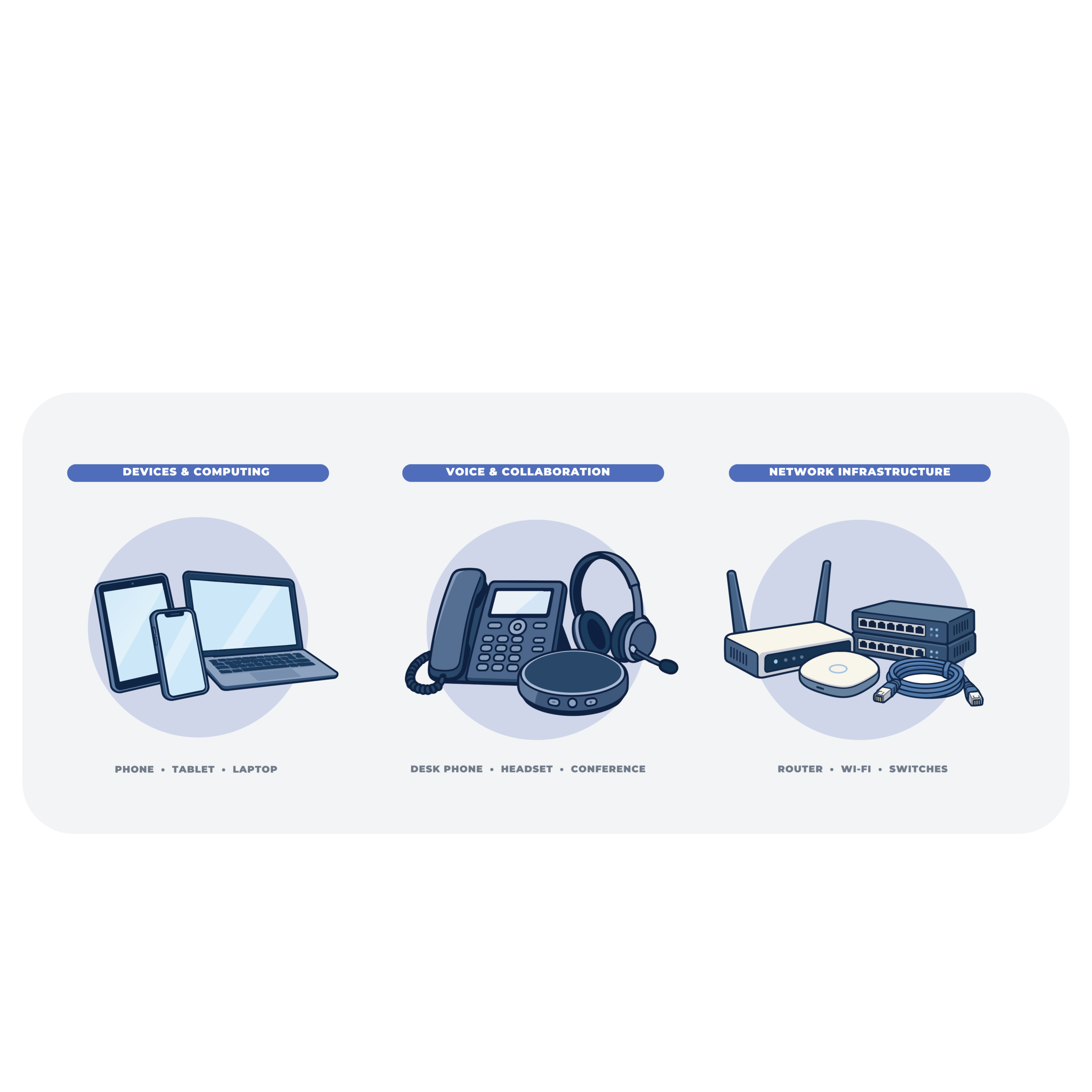
TEM also sits within the broader discipline of technology spend management. While TEM focuses on enterprise connectivity and telecom services, technology spend management can extend financial and operational governance across areas such as mobility, SaaS, and other technology investments. TEM creates the common operating foundation across Finance, IT, Procurement and Operations.
“Telecom is often where an organization first gets a handle on technology spend, and it is rarely where they stop. Once Finance, IT and Procurement work from one inventory and one view of carrier spend, extending that discipline to mobility, SaaS and cloud is the natural next step.”
Will Ledford, Director of Product Marketing — Telecom & Mobility
Why Telecom Expense Management Matters
Telecom complexity makes unmanaged costs difficult to see and even harder to control.
A large enterprise may work with multiple carriers across hundreds or thousands of locations, each with different services, contracts, pricing structures and billing formats. In addition, telecom invoices are notorious for their lack of standardization across carriers, making it hard to decipher and catch off-contract costs. Estate sprawl creates several problems around inaccurate inventory and unvalidated charges. Consequently, the telecom expense estate is shrouded and mystified.
Effective telecom expense management demystifies the environment through structure.
Accurate data gives teams visibility into the telecom estate. Governance establishes policies, thresholds, approvals and accountability around how services and spend should be managed. From there, organizations can apply controls to dispute incorrect charges, disconnect unnecessary services, change plans, manage orders, or address other exceptions.
The benefits of telecom expense management therefore extend beyond finding savings. A mature TEM program can improve inventory accuracy, strengthen financial accountability, reduce manual administration, create more consistent processes, and provide better evidence for decisions involving carriers, contracts and network investments. It also gives Finance teams a more predictable view of telecom spend before the quarter closes.
That foundation also makes telecom cost optimization a continuous discipline rather than a periodic cost-cutting exercise.
How Does Telecom Expense Management Work?
Telecom expense management connects activities that organizations have historically managed separately such as inventory, bill auditing, and procurement. A mature TEM program keeps those relationships connected throughout the telecom lifecycle.
How Does Telecom Expense Management Work?
Establish an Accurate Telecom Inventory
Process and Validate Telecom Invoices
Govern Orders, Services and Contracts
Audit and Optimize Telecom Spend


Telecom Inventory vs. Expense Management: What’s the Difference?
At A Glance:
Inventory management tells you what you have.
Expense management connects what you have to what you’re paying for it.
Telecom inventory management and telecom expense management are closely connected, but they solve different parts of the management problem.

Inventory Management: An accurate telecom inventory records services, circuits, carriers, locations, accounts and other assets across the estate. It provides the operational source of truth needed to understand what is active and how those services relate to the business.
Expense Management: Telecom expense management brings inventory together with invoices, contracts, usage, orders, and financial data. Estate connection allows organizations to determine whether charges are accurate, understand where costs are allocated and identify opportunities for telecom cost optimization.
The two disciplines become more valuable when they operate together. Without reliable inventory, an organization may know it is paying a carrier but struggle to determine whether every charge corresponds to an active, necessary service. Without expense data, inventory provides visibility into assets and services without showing their complete financial impact.
TEM connects the operational and financial sides of the telecom estate. That creates the foundation for governance and gives teams the information required to act when services, costs, or processes fall outside policy.
Where Telecom Cost Optimization Actually Happens
Telecom cost optimization begins with accurate information, but savings are realized through action. A TEM program can identify several opportunities to reduce telecom costs:
- Disconnect unused services. Accurate inventory and usage data can surface circuits and services that are still generating recurring costs despite no longer serving a business need.
- Identify billing errors and discrepancies. Invoice validation can flag unexpected charges, incorrect rates, duplicates, and other billing issues for investigation and dispute.
- Prevent charges after disconnects. Tracking disconnect orders through completion helps ensure that services removed from the environment also stop appearing on future invoices.
- Optimize carrier contracts and rates. Complete spend and usage data gives Procurement stronger evidence for negotiations, renewals and sourcing decisions.
- Consolidate redundant services. A unified view of the telecom estate can reveal overlapping connectivity, vendors or services that may be candidates for consolidation.
- Benchmark pricing and usage. Comparing rates, services and consumption patterns can help organizations identify where costs are out of alignment with expectations or market benchmarks.
The important distinction is between identifying an opportunity and realizing its value:
1. Visibility identifies the opportunity.
2. Governance determines policies it should follow.
3. Control turns the decision into action.
“Uncovering the billing error is only half the job. The value shows up when the dispute is filed, the credit lands, and the unused circuit is actually disconnected. The best telecom programs are measured by what they resolve, not what they report. Insights to Action. Faster.”
Will Ledford, Director of Product Marketing — Telecom & Mobility
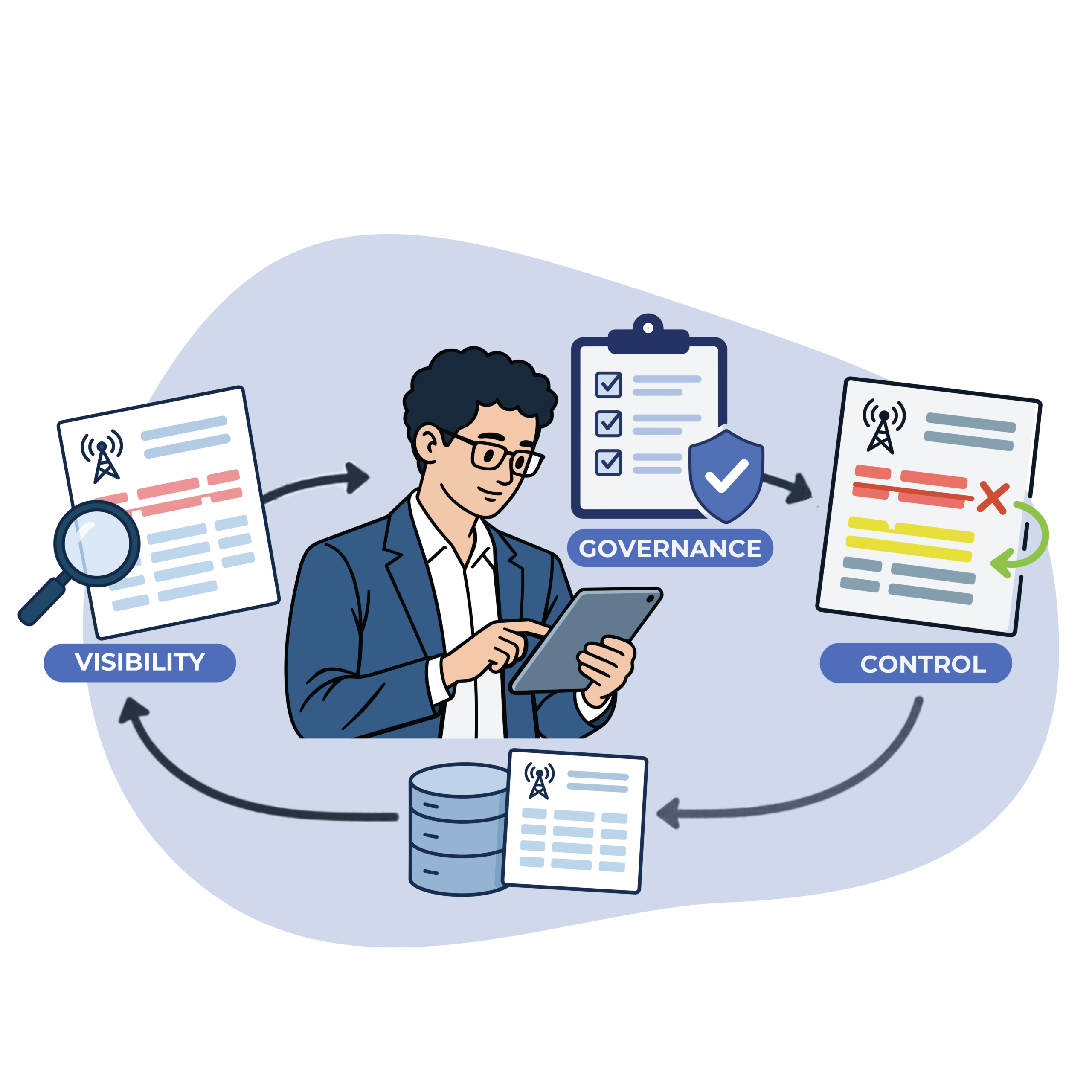
The visibility to control progression makes telecom cost management continuous. Instead of relying on periodic audits to uncover years of accumulated waste, organizations can identify exceptions and optimization opportunities as the telecom estate changes.
What Should You Look for in a Telecom Expense Management Solution?
A telecom expense management solution should help organizations manage the operational and financial complexity of telecom at enterprise scale. The right approach depends on the size and structure of the estate, but several capabilities are particularly important.
- Automation and intelligence capabilities: Look for a platform that can automate high-volume processes and use intelligence to surface exceptions, patterns and opportunities that would be difficult to identify manually.
- Inventory accuracy: A TEM solution should maintain an authoritative record of services, circuits, locations, carriers and related financial information as the environment changes.
- Invoice automation: Automated ingestion, normalization, validation and allocation reduce manual processing while improving the consistency of telecom billing management.
- Cost allocation: Organizations should be able to accurately assign telecom expenses to business units, locations, departments, or other financial structures.
- Auditing and optimization: The platform should identify billing discrepancies, unused services, pricing issues and opportunities for ongoing telecom cost optimization.
- Ordering and lifecycle management: Orders, provisioning, MACDs and disconnects should connect to inventory and billing rather than operate as isolated processes.
- Contract and vendor management: Contract terms, rates, renewals and vendor performance should be accessible alongside the services and costs they govern.
- Workflow automation: Business rules, approvals, and workflows help organizations turn insights into consistent action without adding unnecessary manual work.
- Analytics and reporting: Finance, IT, Procurement and Operations need reliable data to understand costs, usage, inventory, and trends from their respective perspectives.
- Enterprise integrations: TEM should connect with systems such as ITSM, ERP, procurement, HR, and other enterprise platforms to keep operational and financial data aligned.
- Managed services and expertise: Technology can automate significant parts of TEM, while experienced service teams can provide additional support for activities such as invoice processing, auditing, disputes, optimization, and inventory management.
- Global scale: Multinational organizations should also consider carrier coverage, currencies, languages, tax requirements and operational support across regions.
Ultimately, telecom management software should do more than consolidate data. It should give teams the structure and capabilities to govern telecom consistently and act on what the data reveals.
FAQs
Looking for more frequently asked questions about telecom? Check out our FAQ page.
What does telecom expense management include?
What are the benefits of telecom expense management?
What is a telecom expense management system?
What is the difference between telecom expense management and telecom inventory management?
How does telecom expense management reduce costs?
What is telecom cost management?
What is telecom inventory management?
What types of telecom services can telecom expense management manage?
How do you choose a telecom expense management solution?
Ready to take control of your
telecom spend?
Book a demo to see how Calero brings telecom invoices, inventory, and contracts into one view, and how that view extends to mobility, SaaS, Cloud, and AI spend.
Calero | Technology Business Management Solutions Optimize costs, inventory, and operations for SaaS, mobility, telecom, and beyond with a single unified technology business management platform.